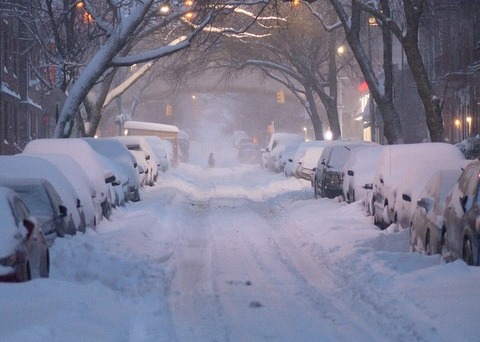
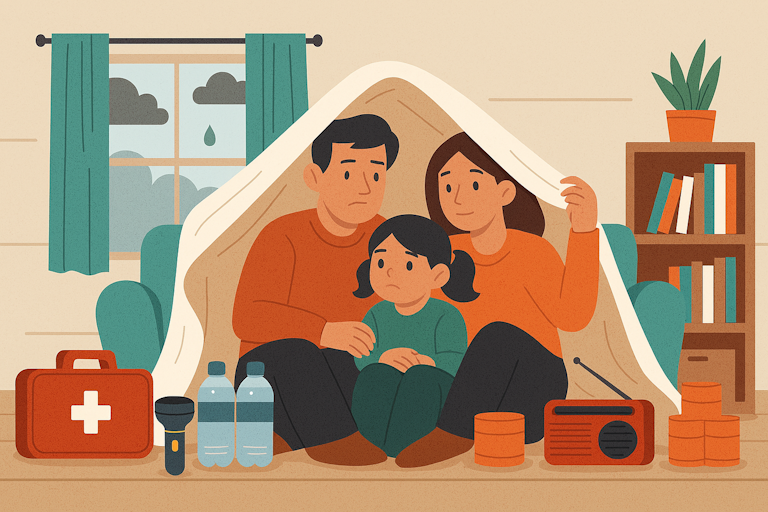
When emergencies such as severe weather, chemical spills, or community lockdowns strike, families need a clear plan. Emergency preparedness with kids: shelter in place is about more than survival; it’s about creating a safe, calm environment where children feel secure.
Choosing the Right Shelter Space
- Interior room: Pick a windowless room, ideally on the lowest level of your home.
- Comfortable size: Ensure it’s large enough for your family to stay several hours.
- Quick access: Kids should be able to reach the space easily without obstacles.
Stocking Your Family Emergency Kit
A shelter-in-place kit should balance survival essentials with child-friendly comforts:
- Basic supplies: Water, non-perishable snacks, flashlights, batteries, first aid kit.
- Comfort items: Stuffed animals, blankets, or favorite toys to ease stress.
- Entertainment: Books, coloring supplies, puzzles to keep kids occupied.
- Health essentials: Prescription medications, diapers, wipes, hygiene products.
Making the Space Kid-Friendly
- Safety first: Cover outlets, remove sharp objects, secure furniture.
- Calm atmosphere: Use soft lighting and keep noise levels low.
- Routine matters: Encourage kids to bring bedtime items for familiarity.
Communicating with Children During Emergencies
- Explain simply: Use age-appropriate language about why you’re sheltering.
- Offer reassurance: Remind them the space is safe and you’re together.
- Practice drills: Role-play shelter-in-place scenarios so kids know what to expect.
Planning Ahead for the Unexpected
- Backup power: Keep a battery-powered radio or phone charger.
- Emergency contacts: Write down important phone numbers and store them in the kit.
- Exit strategy: Know how you’ll leave once authorities give the all-clear.
Final Thoughts
Emergency preparedness with kids: shelter in place is about protecting both physical safety and emotional well-being. By preparing a safe, stocked, and comforting environment, you’ll help your children feel secure even in uncertain times.